
St. Johns Countyroofing and exterior work
St. Johns is the fastest-growing county in Northeast Florida and the one place in our service area where the wind map genuinely changes underneath you. We work in St. Augustine and in the St. Johns community, and we permit both properly.
The newest housingin Northeast Florida
The median St. Johns County home was built in 2004. Nearly 60 percent of its 133,000 housing units have gone up since 2000 and fewer than 14 percent predate 1980: the youngest stock of any county we work in, and the reason the county has grown by more than a quarter since the 2020 census.
That changes the conversation. In Duval County, roof age explains most of the calls. Here it rarely does. What we get called out for in St. Johns County is storm damage, a detail that was not finished properly the first time (flashing at a wall, a pipe boot, a valley, a skylight seal) and additions to homes whose roofs are otherwise fine.
“Your roof is old” is the wrong answer in this county most of the time, and we will tell you so rather than sell you a replacement you do not need yet.
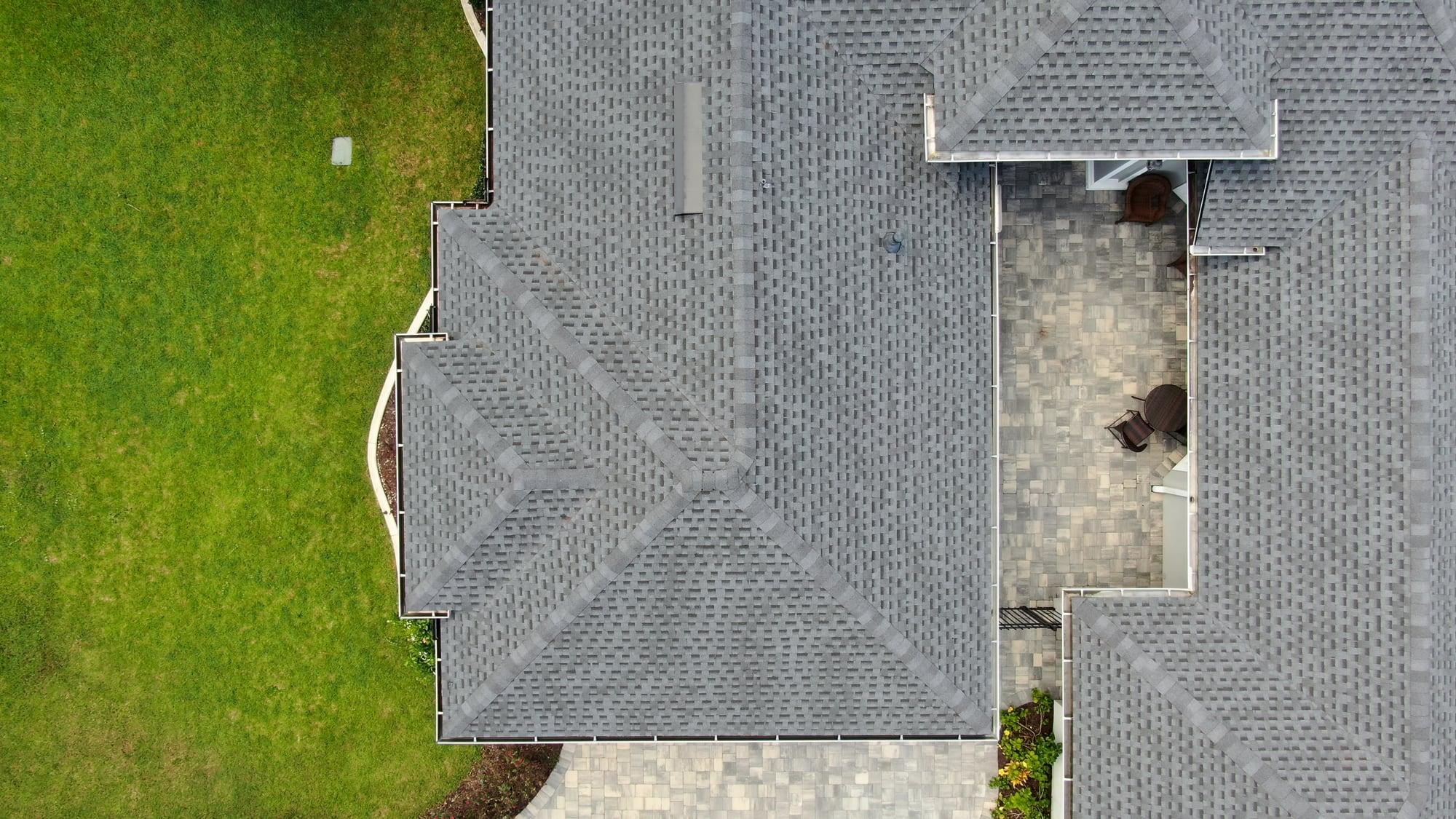
The wind lineruns through this county
Everywhere else we work, the 130 mph contour on the official state wind map sits offshore or clips a corner. In St. Johns County it runs north to south straight through the county, roughly along the Intracoastal and the coastal strip. Land east of that line is at 130 mph or greater; everything west of it falls between 120 and 130. Two houses a short drive apart can sit on opposite sides of it.
St. Johns County publishes no single mph figure, and that is a deliberate choice: its own guidance sends applicants to look the address up in the hazards tool, and projects permitted after the end of 2023 use ASCE 7-22 wind loads. The county also developed its own local landmark wind map for the 2023 code rather than accepting the state preliminary map unchanged.
Practically, it means nobody should quote you a wind number for “St. Johns County” as though one exists. The answer is per address, and it is the building department’s to give.
Three departmentsone county
Unincorporated addresses go through the St. Johns County Building Department at 4040 Lewis Speedway. The City of St. Augustine and the City of St. Augustine Beach are separate municipalities and each runs its own building department, St. Augustine Beach is not a district of St. Augustine, whatever the names suggest.
The trap is the mailing address. A very large share of “St. Augustine, FL” addresses are unincorporated county parcels; the county’s own building headquarters is one of them. Anyone who maps a town name to a permitting authority without checking the parcel will be wrong a lot of the time in this county.
In most cases the county also wants a Clearance Sheet before it will accept a permit application, and roofs are permitted separately from other work. We file it.
What we doin St. Johns County
St. Johns Countyquestions we get asked
For an unincorporated address, the St. Johns County Building Department at 4040 Lewis Speedway does. You can reach it on (904) 827-6800. The county contains only two municipalities that matter for permitting, St. Augustine and St. Augustine Beach, and each of those runs its own building department. The catch is that a mailing address does not settle it: the county's own building headquarters carries a St. Augustine address and sits on unincorporated land, so we confirm by parcel before filing.
The county deliberately publishes no fixed number. Its guidance directs applicants to determine wind design and wind-borne debris criteria by entering the project location in the ATC Hazards by Location tool, and projects permitted after December 31, 2023 use the ASCE 7-22 wind load. What the official state map shows is that the 130 mph contour runs north to south through this county, so land east of it is at 130 mph or greater, and the rest falls between 120 and 130.
Usually yes. In most cases St. Johns County requires a Clearance Sheet before it will accept a building permit application, and roofs are permitted separately from other work. It is a small step, but it is the one that quietly delays a job when a contractor has not done it before. We handle it as part of the permit rather than treating it as your problem.
Two, honestly. Hurricane Matthew in 2016 produced an 86 mph gust at the St. Augustine Pier and led to more FEMA housing assistance for St. Johns County homeowners than any other county in the region got from that storm: 1,377 approved awards and about $7.07 million. Hurricane Irma in 2017 spawned an EF-2 tornado at Crescent Beach and an EF-1 near Vilano Beach, where the National Weather Service recorded roof damage on several streets. Ian, Nicole and Milton all brought federal individual assistance to this county, but those were storm-surge and river-flooding events, not wind-and-roof events, and we will not pretend otherwise.
No, and we would rather be specific than pad a map. In St. Johns County we work in St. Augustine and in the St. Johns community in the 32259 area. St. Johns County is a smaller share of our business than Nassau or Duval, but it gets the same licensed crews, the same permits pulled properly, and the same inspection photos sent to you either way.
Storm damage or a leak?We'll come look and send photos
Call or text us with what you're seeing and we'll get an inspection scheduled. Free estimate, photos of whatever we find, and no minimum trip fee.
Call or text · Available 24/7