
Clay Countyroofing and exterior work
Clay County is a smaller part of our map than Nassau or Duval, and we would rather say so than pretend otherwise. We are licensed here, we pull Clay County permits, and the work looks the same as it does anywhere else we go.
Clay County is inlandand that changes what fails
Clay has no Atlantic frontage. Its eastern edge is the St. Johns River, which makes it riverine rather than salt-oceanfront, and it means the corrosion problems that eat fasteners and flashing at the beaches are not the story here. Tree load and rain are.
Northeast Florida gets about 52 inches of rain a year across roughly 114 rain days, and close to 40 percent of it falls in June, July and August. Short, intense summer storms are exactly the load pattern that finds a tired valley, a cracked pipe boot or a gutter that has lost its slope.
The county’s housing is mostly 1990s and 2000s subdivisions. The median Clay County home was built in 1996, and about three quarters of its occupied homes are owner-occupied out of roughly 89,000 housing units. A 1996 roof is either on its second covering already or coming due for one, which is most of what we get called about here.
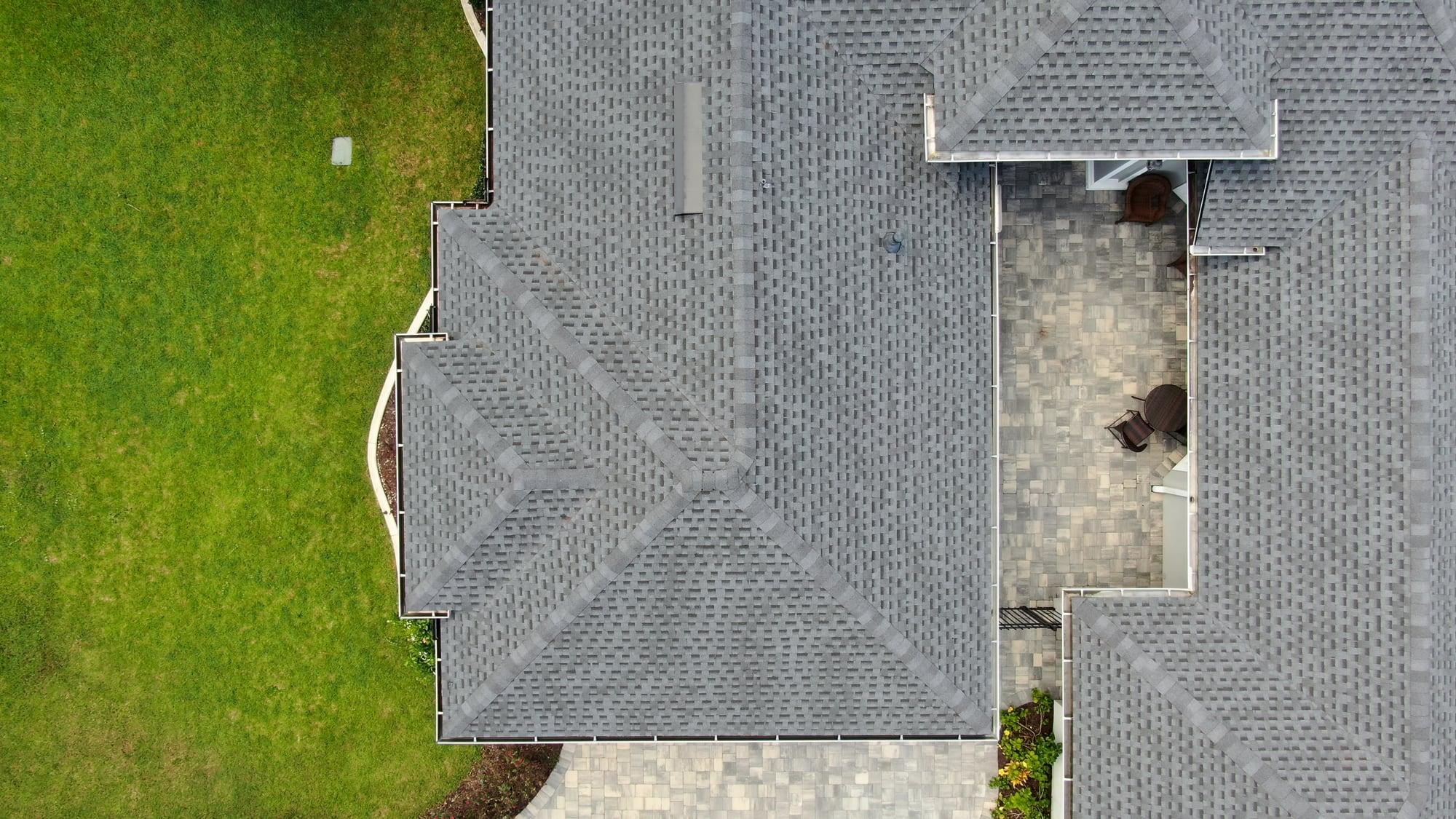
Clay publishesits own wind numbers
Most jurisdictions around here do not print a wind speed at all. They send you to the ASCE 7 Hazard Tool and let it answer per address. Clay County is different. It publishes a wind zone table: 130 mph ultimate design wind speed for Risk Category II, which is the category ordinary homes fall in, with 120 mph for Risk Category I, 140 mph for Category III, and 140 mph for Category IV, rising to 150 mph for Category IV structures east of SR 21.
Clay also went its own way on the map itself. For the 8th Edition (2023) Florida Building Code, it adopted a local landmark wind map rather than accepting the state preliminary map unchanged, which only one other county in our service area did. Whatever else that tells you, it tells you Clay’s building department pays attention to this.
Permits hereand the one exception
Unincorporated Clay County permits run through the Clay County Building Division, which works out of the Development Services Building at 435 Walburg Street in Green Cove Springs and takes every application through its Citizens Access Portal.
The exception is the Town of Orange Park, which issues its own permits, Clay County does not permit inside the town limits. That distinction is not cosmetic; it changes which office your application goes to and who inspects the work.
One more thing worth knowing before someone offers you a permit-free re-roof: Clay County’s guidance on Florida House Bill 803 says the under-$7,500 permit exemption starting July 1, 2026 does not apply to roofing. A roof permit is still required no matter what the job costs.
Where we workin Clay County
What we dofor Clay County homes
Clay Countyquestions we get asked
For an unincorporated Clay County address, the Clay County Building Division does, and every application goes through the county's Citizens Access Portal. The Town of Orange Park is the exception. It runs its own permitting and Clay County does not permit inside the town limits. Because a mailing address does not decide this, we confirm the permitting authority by parcel before we file anything.
Clay County publishes 130 mph as its ultimate design wind speed for Risk Category II, which covers ordinary homes. Its published table also sets 120 mph for Risk Category I, 140 mph for Risk Category III, and 140 mph for Risk Category IV, rising to 150 mph for Category IV structures east of SR 21. Those are ultimate three-second gust design values under ASCE 7, not a forecast of what your house will see.
For roofing, yes. Clay County's own guidance on Florida House Bill 803 states that the new under-$7,500 permit exemption taking effect July 1, 2026 explicitly does not apply to roofing. A permit is still required regardless of what the job costs. We pull it. We will not do unpermitted work on your property, and no reputable contractor should offer to.
No. The wind-borne debris region reaches at most about a mile inland from the mean high-water line on the open coast, and Clay County has no Atlantic coastline at all. Its eastern edge is the St. Johns River. That means opening-protection requirements driven by the debris region do not apply here. The definitive per-address answer always comes from the building department or the ASCE 7 Hazard Tool.
A small share. Most of what we do is in Nassau and Duval County, and we would rather tell you that than claim a presence we do not have. What we can tell you is that we hold both a Certified Roofing Contractor and a Certified Building Contractor licence, we pull Clay County permits properly, and a Clay County job gets the same crews and the same scheduling as anything else on our board.
Working in Clay County?We pull the permit and show up
Call or text us with what you're seeing and we'll get an inspection scheduled. Free estimate, photos of whatever we find, and no minimum trip fee.
Call or text · Available 24/7