
St. Johnsroofing and exterior work
St. Johns has some of the newest houses we work on anywhere in Northeast Florida. That is a genuinely different roofing problem, and it mostly means telling people they do not need what somebody else tried to sell them.
Newer roofsfail differently
The median home in the 32259 ZIP was built in 2009. Fewer than 5 percent of its roughly 25,000 housing units predate 1980, and only about a quarter predate 2000. That is about as new as housing stock gets around here. The Duval County median is 1986 and Orange Park’s is 1974.
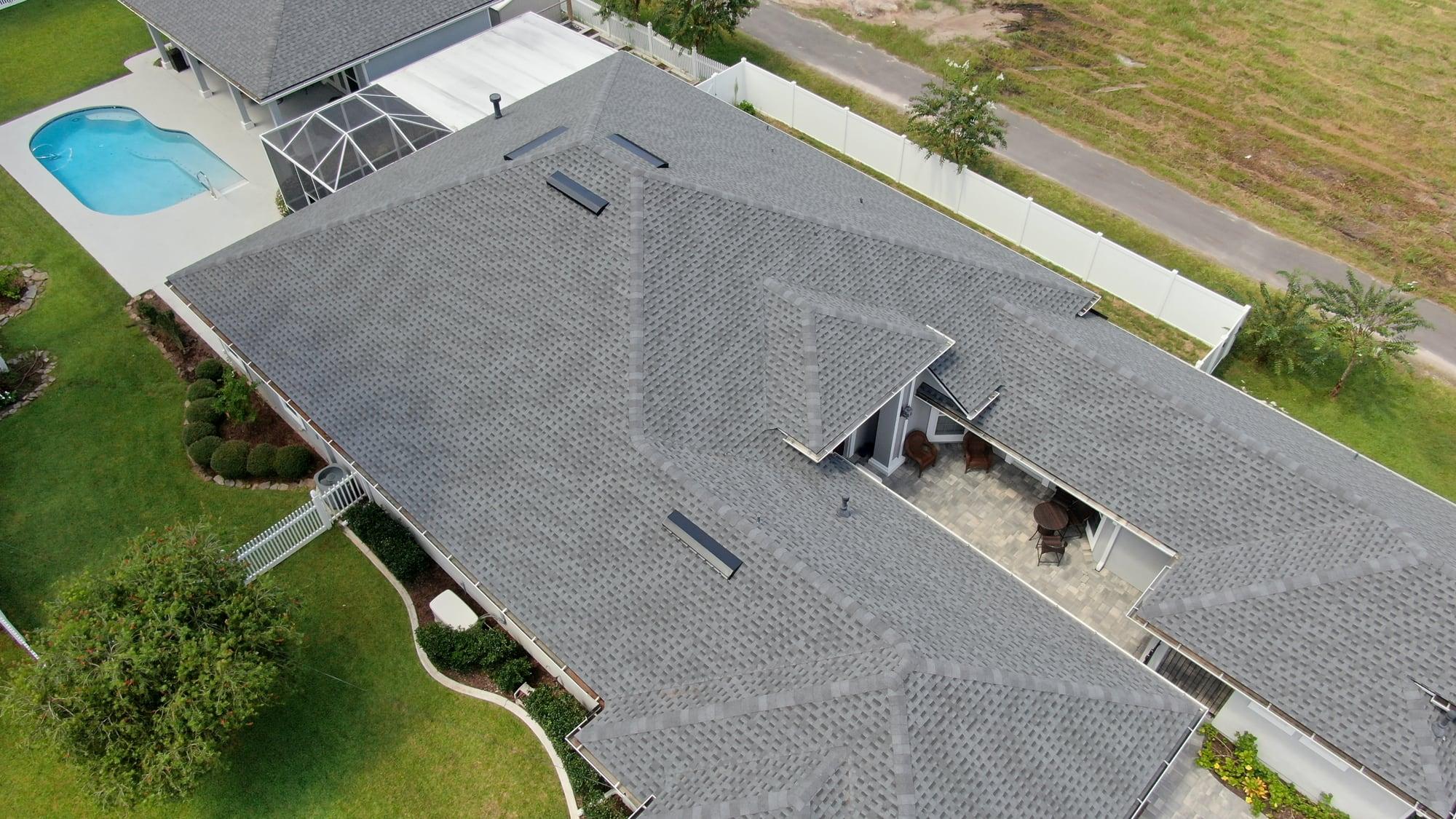
An old roof wears out broadly: the mat gets brittle, granules wash off, the whole plane goes at once. A newer roof does not do that. It fails at a single point, and it is usually a detail: flashing at a wall or chimney, a pipe boot that has split, a tight valley, a skylight seal, or ventilation that never worked properly. Sometimes it is just storm damage in an otherwise sound roof.
So the honest answer in St. Johns is usually a repair, not a replacement, and often the roof is still inside its manufacturer warranty. We inspect, send you the photos, and tell you which one it is.
Not a citynot even a CDP
St. Johns is an unincorporated community in the northwest corner of St. Johns County. There is no Town of St. Johns, no city hall, and no local building department, “St. Johns, FL 32259” is a postal place name, not a governmental boundary, and unlike Yulee or Fruit Cove it is not even a Census designated place.
That sounds like trivia until permit time. Every address here is permitted by the St. Johns County Building Department, which in most cases wants a Clearance Sheet before it will even accept the application, and permits roofs separately from other work. A contractor who does not know that is a contractor whose schedule is about to slip.
River waternot salt water
St. Johns fronts the St. Johns River and the Julington and Durbin Creeks, which the US Geological Survey places a little under seven miles upstream of where each meets the river. That is riverine exposure. The salt corrosion that works on fasteners and flashing at the beaches is not the driver here, and this area is not in the wind-borne debris region. That reaches at most about a mile inland from the open coast.
Rain is the load that matters. Northeast Florida takes roughly 52 inches a year over about 114 rain days, with close to 40 percent of it arriving in June, July and August. On a roof this young, an afternoon storm season is the thing that finds a detail somebody rushed, which is exactly what we go looking for.
What we doin St. Johns
St. Johnsquestions we get asked
The St. Johns County Building Department, at 4040 Lewis Speedway in St. Augustine. There is no Town of St. Johns and no local building office here: 32259 is unincorporated, so the county is the permitting authority for every address in it. The county asks for a Clearance Sheet before it will accept most permit applications, and roofs are permitted separately from other work. We file both.
No. St. Johns is an unincorporated community in northwestern St. Johns County. It is not a municipality, and it is not even a Census designated place, “St. Johns, FL 32259” is a USPS ZIP-code place name rather than a governmental boundary. Parts of 32259 do fall inside the Fruit Cove CDP, but a CDP is a statistical boundary with no permitting authority at all, so nothing about it changes who pulls your permit.
Because on stock this new the problem is almost never wear. The median home in 32259 was built in 2009 and only about 5 percent of the ZIP predates 1980, so a roof here is usually still young and often still inside its manufacturer warranty window. What goes wrong instead is detail work and weather: flashing where the roof meets a wall, a cracked pipe boot, a valley that was cut tight, a skylight seal, attic ventilation, or wind and hail damage from a storm. Those are repairs, not replacements, and we will say so.
Not the way the beaches do. St. Johns fronts the St. Johns River along with Julington and Durbin Creeks, both of which meet the river a little under seven miles downstream of here, so this is riverine exposure, not oceanfront, and it is not in the wind-borne debris region. Rain is the real load: roughly 52 inches a year across about 114 rain days, with close to 40 percent of it falling in June, July and August. Short, hard summer storms find a bad detail faster than years of sun ever will.
Nobody publishes a figure for St. Johns specifically, and the county publishes none by design. It directs applicants to look the address up in the hazards tool instead. What the official state map shows is that the 130 mph contour runs along the coastal strip well to the east of here, which puts 32259 in the 120 to 130 mph band for ordinary homes. The governing number for your permit is the per-address value the building department works from.
Told you need a new roof?Get a second look first
Call or text us and we'll inspect it, photograph what we find, and tell you honestly whether it's a repair. Free estimate, no minimum trip fee.
Call or text · Available 24/7